








The rise of Treatonomics: small luxuries in hard times
We’re living in the age of Treatonomics - the boom of small luxuries when bigger goals feel out of reach. From lipsticks and collectible toys to concerts with sky-high ticket prices, people are choosing treats that feel possible in uncertain times. Traditional milestones like buying a home or planning a wedding are being replaced by smaller “inch-stones”: a latte after a bad day, skincare as self-care, or even a birthday party for a pet.
It’s a modern twist on the old Lipstick Effect, but far more intense. Today, treating ranges from a $5 pick-me-up to a $500 escape, each purchase carrying emotional weight beyond its price tag. Our survey of nearly 2,000 people shows just how deeply this culture runs.
Key results
- 1 in 3 buy small treats almost daily; only 10% “hardly ever.”
- Over half (57%) keep buying treats even when broke.
- 63% say treats cheer them up, but 1 in 10 feel worse after.
- 73% believe small luxuries are modern addictions.
- To afford indulgences, 44% borrowed money; 23% even delayed rent.
Habits: small luxuries, big routines
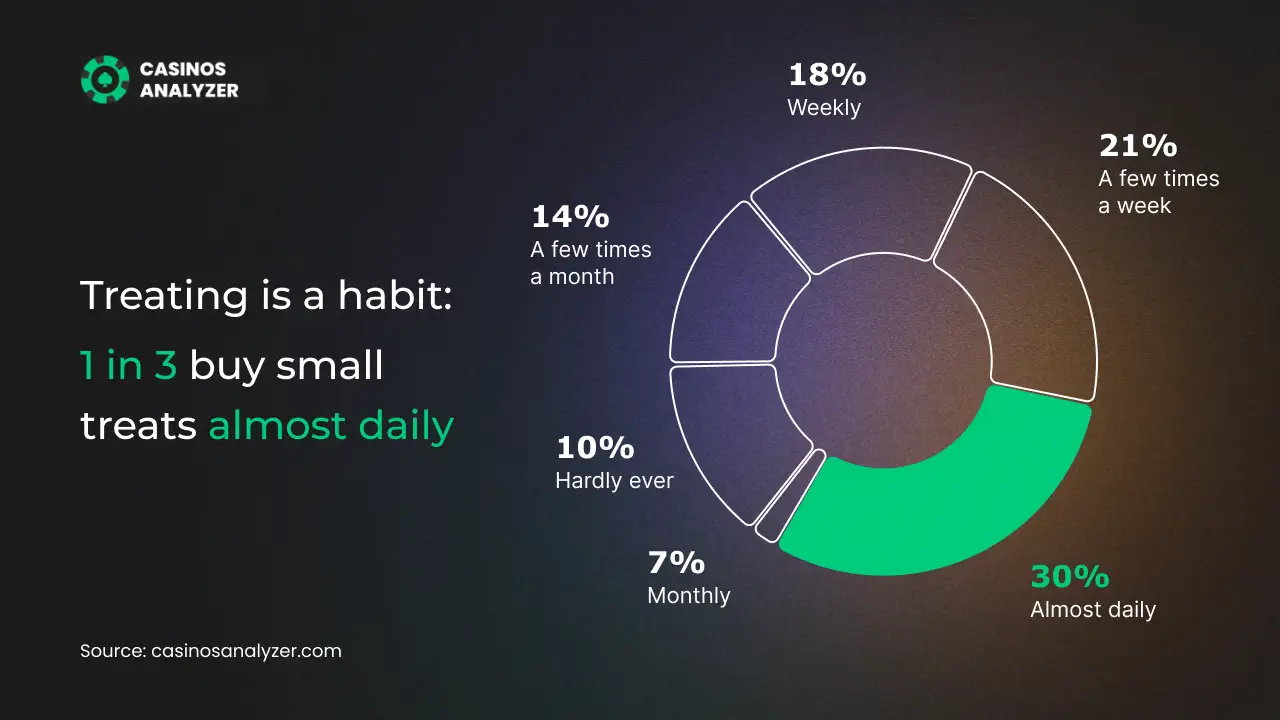
1 in 3 (30%) say they buy small treats almost daily, which turns indulgence into routine. Another large slice does it multiple times a week, pushing treats out of the “special occasion” box and into everyday life. Only 10% claim they “hardly ever” treat themselves – the true outliers now. If you feel like everyone around you is on a first-name basis with their barista, you’re not imagining it.
Can we afford the habit?
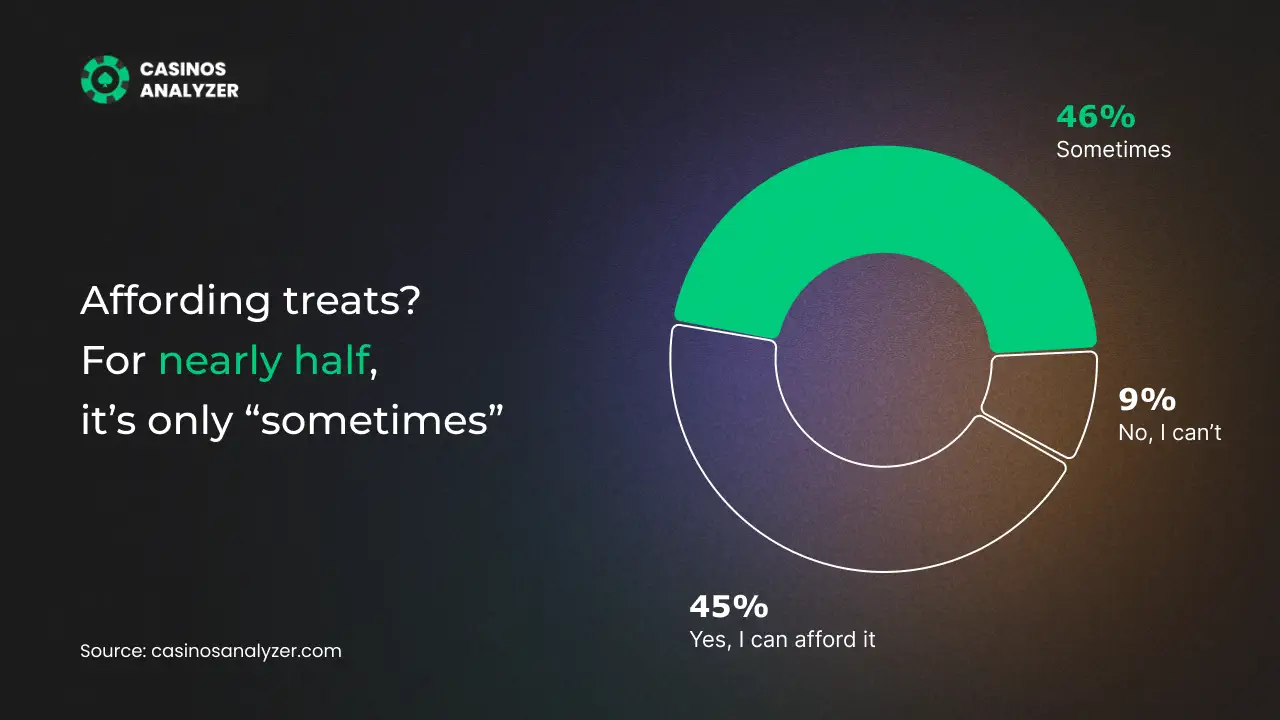
Affordability sits on a knife-edge. 45% say they can afford their treats, yet an equal 46% hedge with “sometimes,” which is really a feeling as much as a number. And 9% admit they can’t – but still, many of them buy anyway. That tension between comfort and cost is the emotional surcharge baked into every small luxury.
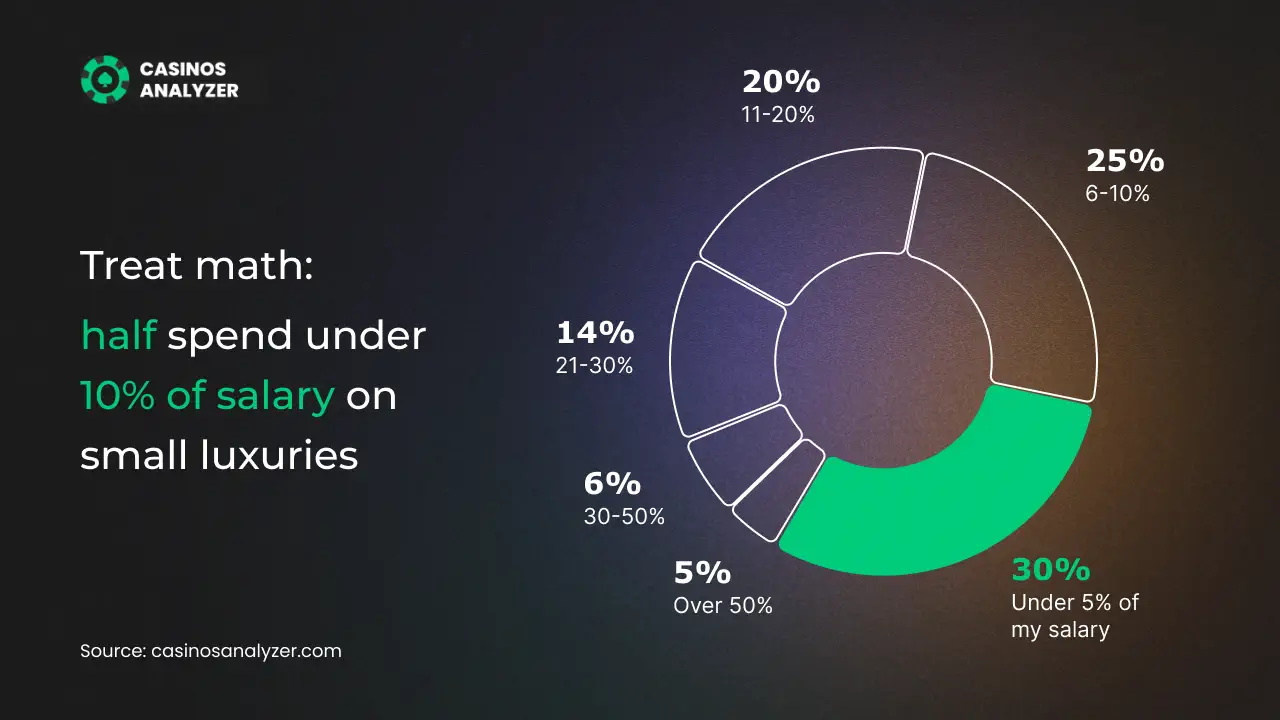
For most, spending stays modest: 30% keep it under 5% of their salary. But the outliers are impossible to ignore: 6% spend 30–50%, and another 5% pour over half of their income into small luxuries. That’s not a splurge, it’s a second rent check funneled into coffees, candles, and quick highs. It shows two extremes of Treatonomics: for many, treats are harmless boosts, but for some, they swallow the biggest slice of the paycheck.
Coping under pressure
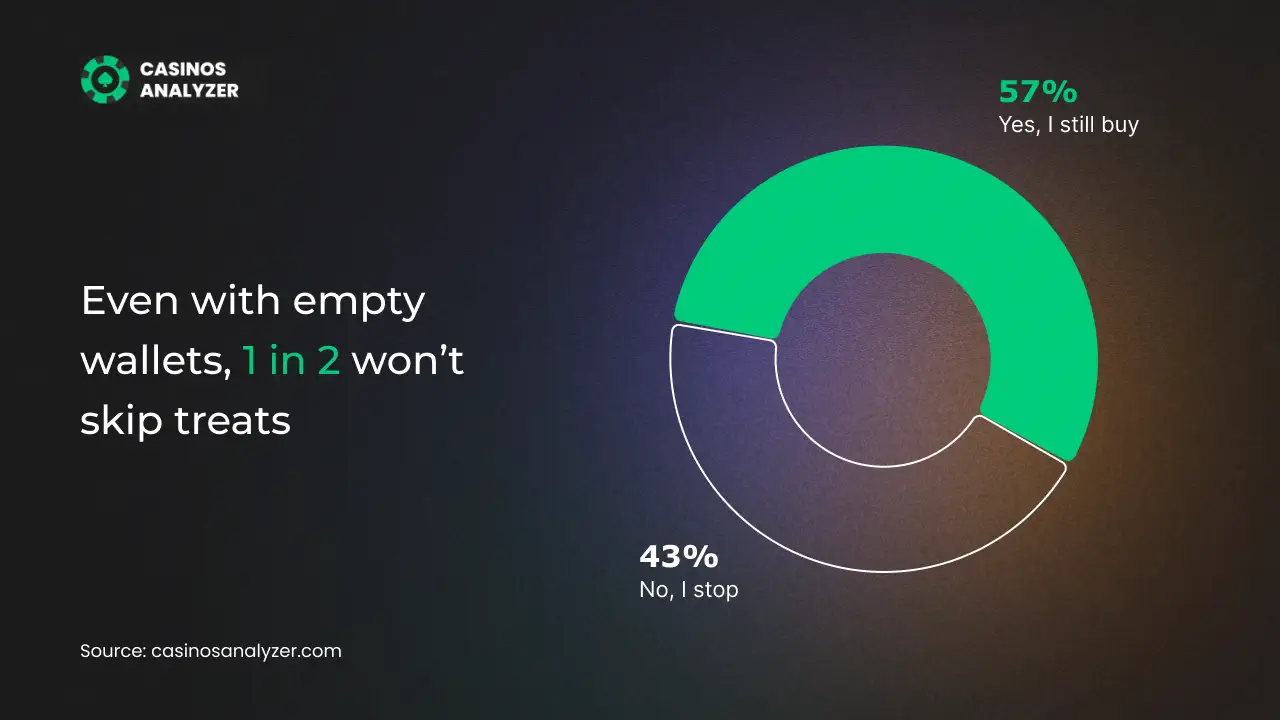
The habit doesn’t stop when the money does. 57% keep buying treats even when they’re broke, and the rest (43%) are the minority who actually hit pause. That’s Treatonomics in a sentence: the ritual survives the budget. When resources shrink, people protect the tiny things that make life feel normal.
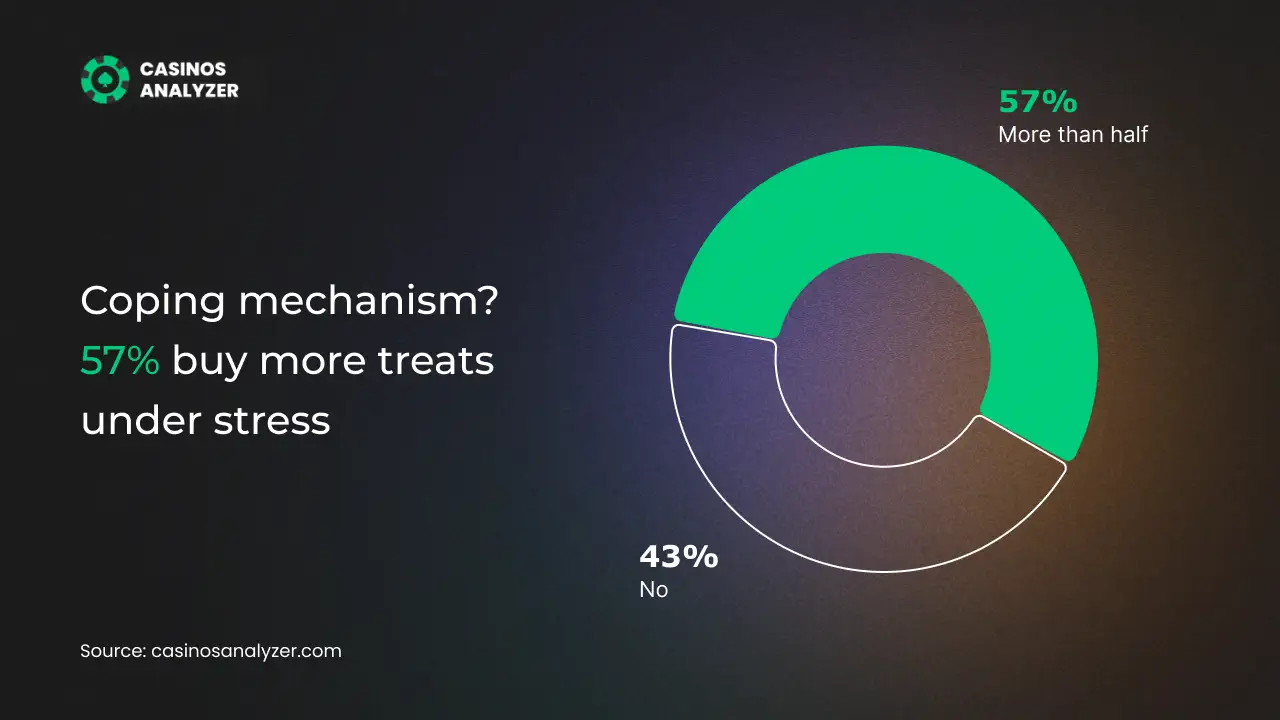
Stress turns the dial up. 57% buy more when stressed, while 43% say pressure doesn’t change their behavior. For most, treats act like a quick mood stabilizer – not a solution, a moment. The purchase is small; the relief feels bigger.
Emotional impact and dependence
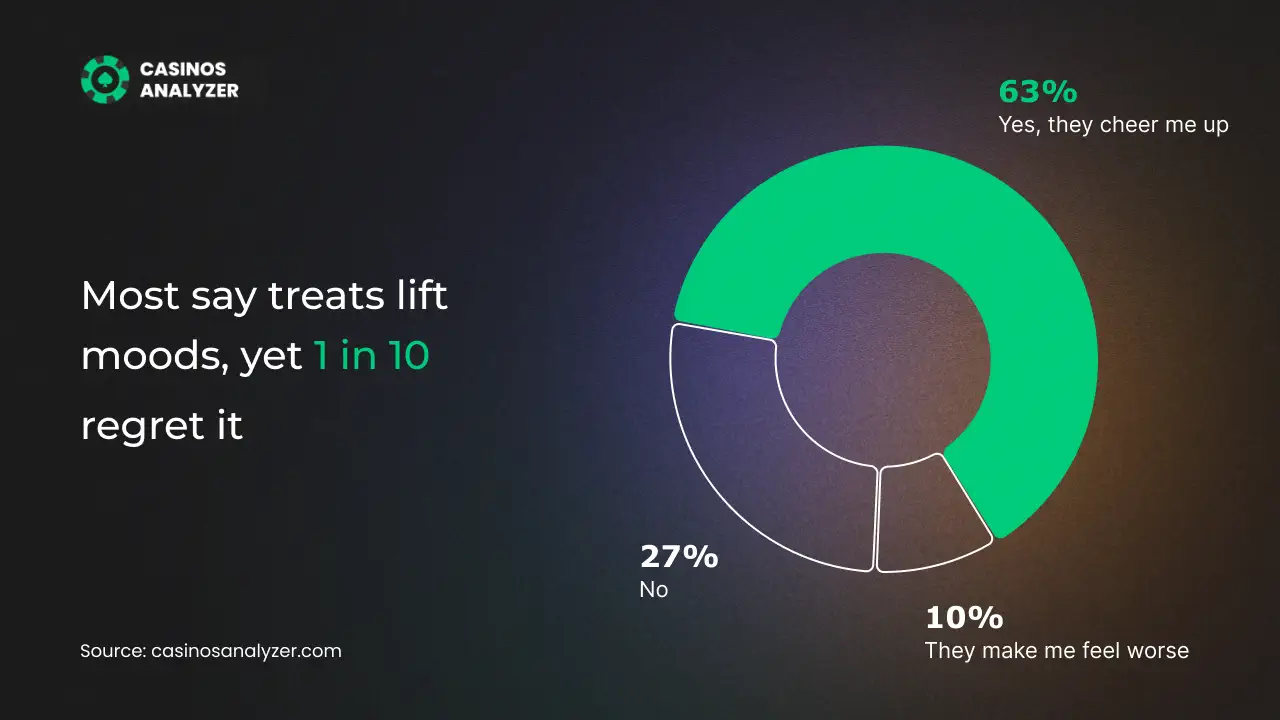
For the majority, the boost is real: 63% say treats cheer them up. But the glow isn’t universal – 27% don’t feel much difference. And for 1 in 10 (10%), it backfires, leaving them feeling worse after the high fades. That’s the paradox of a pick-me-up that sometimes picks a fight.
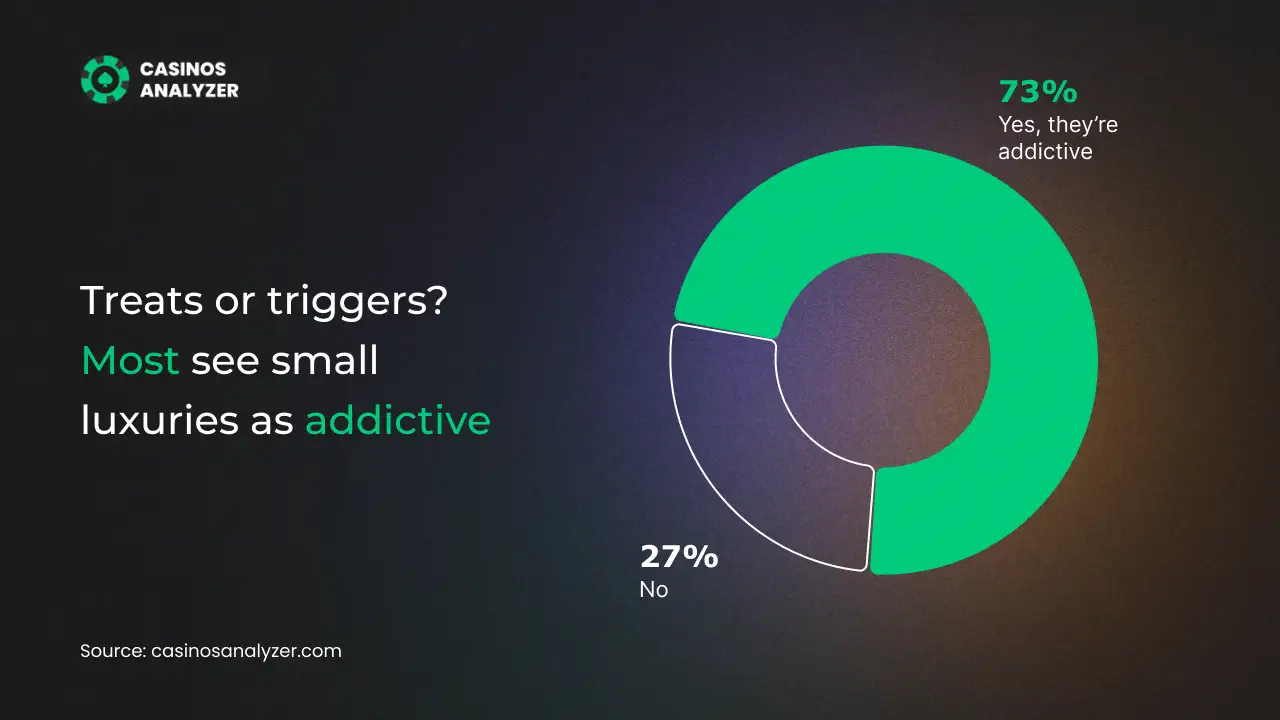
The public verdict is blunt. 73% believe small luxuries are a modern addiction, easy to start and hard to dial back. Only 27% reject that framing. If most people describe it like a compulsion, brands and policymakers should probably listen.
Trade-offs and non-negotiables
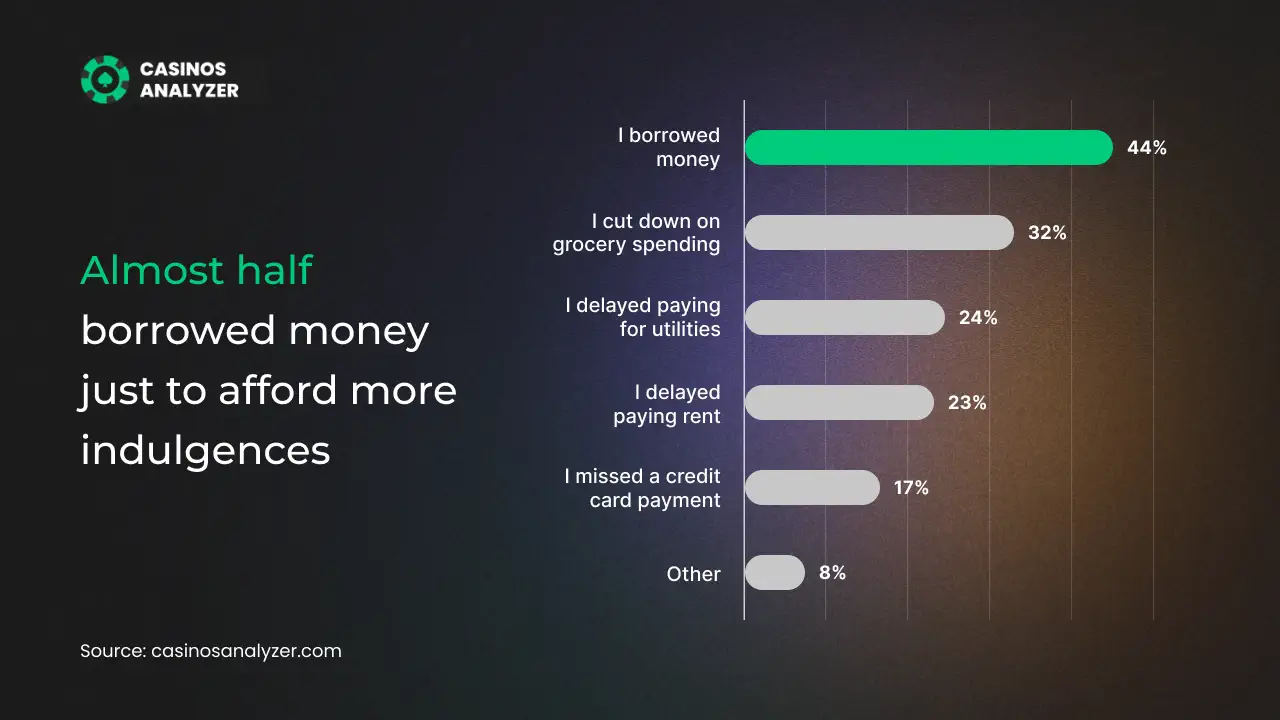
To keep their treats, people are willing to stretch their budgets in risky ways. 44% admit they’ve actually borrowed money just to afford indulgences, while another 32% cut back on groceries to make room. Beyond that, some even let essential bills slide, choosing comfort over obligations. What looks like a harmless pick-me-up carries hidden weight – proof that in Treatonomics, small luxuries can drive surprisingly big sacrifices.
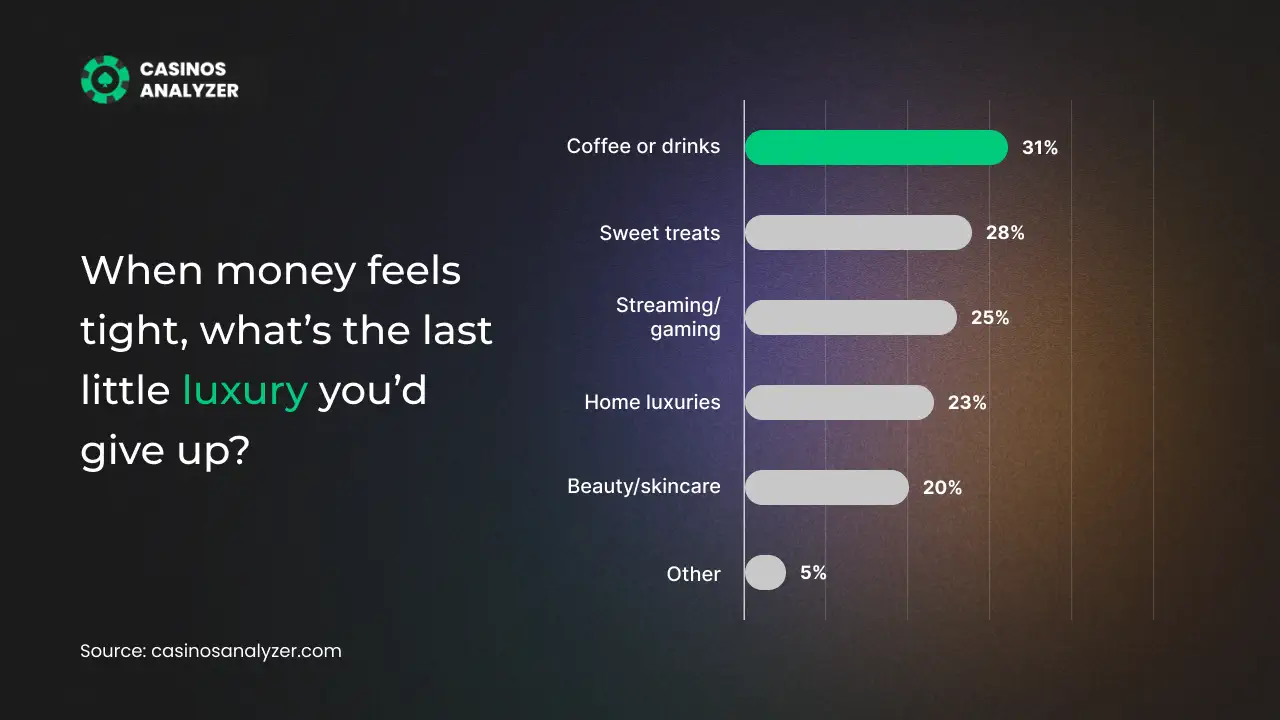
When push comes to shove, coffee/drinks are the hill people die on: 31% would give them up last. Sweet treats (28%) and streaming/gaming (25%) form the next line of defense. Beauty and home comforts follow later, but not without a fight. If caffeine feels non-negotiable, you’re in the majority.
How we frame it
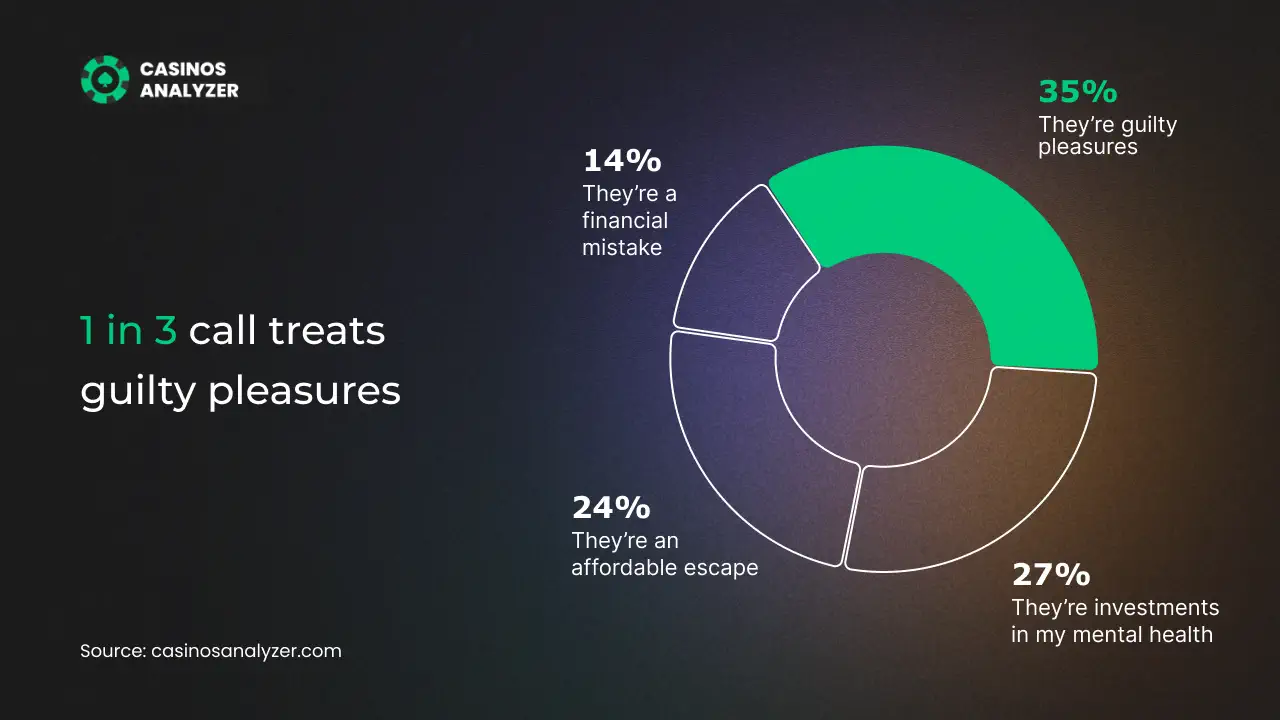
This is where the story splits. 35% call small luxuries guilty pleasures; 27% defend them as a mental health investment. Add 24% who see an affordable escape, and more than half frame treats as emotional maintenance, not waste. The same purchase can be comfort, coping, or a mistake – it depends on who’s holding the cup.
Methodology
To create this study, researchers from Casinos Analyzer surveyed 2,000 participants of all genders, aged 21 and over.
Similar articles

Mobile casinos have become a formidable trend that is not disappearing any time soon. Many casino games developers and operators are working to make their offerings as mobile-friendly as possible.

The biggest hotel in Vegas offers captivating slot machines, roulette wheels, great jackpot prizes, unusual food courts, and non-stop entertainment. Check the top-notch casinos in Vegas to get your gambling freak on and find the right spot for state-of-the-art gamification.

The top reasons people bet? Fun leads the way, with nearly 4 in 10 saying that’s their main reason for betting. A close second? The potential to make money, cited by 38%. Another third describe the adrenaline rush as the key draw, not the outcome, but the feeling.
